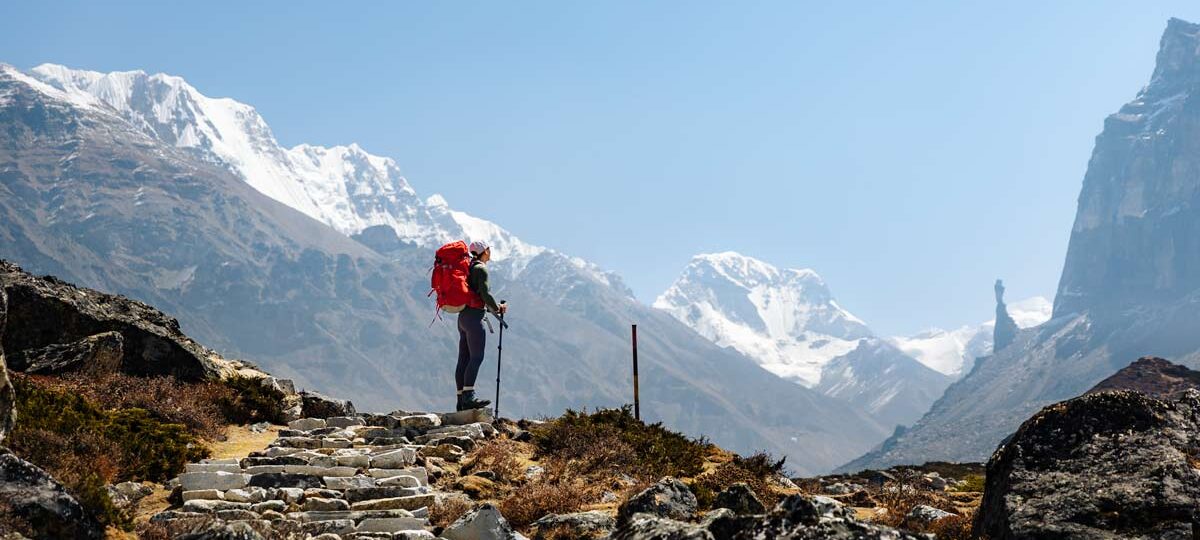
If you’re looking for a trek that feels untouched, raw, and real, the Kanchenjunga Circuit Trek is in a completely different league compared to Everest or Annapurna. This is not a “comfortable trek.” It’s a commitment—but the reward is something very few trekkers ever experience.
Why You Should Choose This Trek
Most people go to Everest Base Camp or Annapurna Circuit. Those are beautiful—but crowded, commercial, and predictable.
Kanchenjunga is the opposite:
- True wilderness: No road noise, no crowds—just forests, glaciers, and silence
- Two base camps: You’ll stand beneath Kanchenjunga from both north and south sides
- Authentic culture: Rai, Limbu, and Tibetan-influenced villages untouched by mass tourism
- Dramatic landscapes: From subtropical jungle to high alpine glacier in one trek
- Mental challenge: This trek changes how you think—not just what you see
If Everest feels like a “destination,” Kanchenjunga feels like a journey.
Kanchenjunga Circuit Trek — A Story From the Trail (Day-by-Day Experience)
This isn’t just an itinerary. This is what it feels like to walk the Kanchenjunga Circuit Trek—day after day, step after step, as the world slowly disappears behind you.
✈️ Day 1: Fly to Bhadrapur & Drive to Phikkal
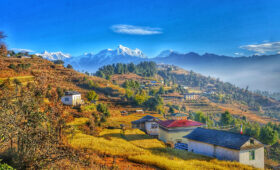
The journey begins before the mountains even appear. From Kathmandu, the short flight drops you into the flat, humid plains of eastern Nepal—warm air, palm trees, and a completely different world. Then comes the drive upward toward Ilam. Slowly, the landscape shifts—tea gardens begin to roll across the hills like green waves. You’ll pass workers plucking leaves, baskets on their backs, moving with quiet rhythm. The air cools as you climb. Phikkal feels peaceful, almost sleepy, with fog drifting in and out like a curtain. It’s hard to believe that in a few days, you’ll be standing near glaciers. Tonight, you sleep comfortably—but somewhere inside, the adventure has already started. The silence here is soft, welcoming. Tomorrow, it begins to deepen.
🚙 Day 2: Drive to Taplejung
The road gets rougher today, and you start to feel distance—not just physically, but mentally. Taplejung isn’t polished; it’s raw and alive. Dust rises behind vehicles, local markets buzz with voices, and the smell of spices and woodfire hangs in the air. You’ll see school kids, porters, traders—this is a working town, not a tourist stop. As the road winds higher, the Himalayas begin to tease you, occasionally revealing snow peaks between clouds. The realization slowly hits: you’re heading toward one of the most remote trekking regions in Nepal. Connectivity drops. Comfort drops. But something else rises—anticipation. Tonight, you prepare gear more seriously. The road ends soon. After this, your feet take over.
🚙 Day 3: Drive to Japantar
This drive is not easy. The road narrows, turns rough, sometimes barely a road at all. You cross rivers, pass cliffs, and feel the remoteness growing stronger with every hour. Japantar feels like the edge of civilization. There are fewer people, fewer buildings, and more silence. You’ll notice the sky feels bigger here. There’s a certain stillness that’s hard to describe—it’s not empty, it’s deep. You meet your porters properly here, and suddenly the trek feels real. Bags are adjusted. Final supplies are checked. There’s a quiet excitement in the group. You go to sleep knowing that tomorrow, you walk into the unknown. No more vehicles. No shortcuts. Just trail.
🥾 Day 4: Japantar to Amajilosa
The first day of walking always feels lighter than expected. Your legs are fresh, your energy high, and the trail welcomes you with lush forest and the sound of rivers. The path cuts through dense greenery, bamboo groves, and small villages. Suspension bridges sway gently over rushing water. If it’s monsoon season, leeches might make their presence known—annoying, but part of the experience. The air is humid, and sweat becomes constant. But it feels alive. Amajilosa is a small settlement, quiet and simple. As night falls, you hear insects, distant water, maybe a dog barking somewhere. You realize something: the outside world is already far away. This is just the beginning.
🥾 Day 5: Amajilosa to Gyabla
The climb begins to feel real today. The trail rises and falls, testing your rhythm. Forest slowly gives way to more open landscapes. Stone houses appear—different from the lower villages. Prayer flags flutter in the wind. You’re entering a more Tibetan-influenced region. The air is cooler, cleaner. Locals greet you with simple smiles, sometimes curious, sometimes quiet. Gyabla feels like a step into another culture. Yaks graze nearby, bells echoing softly. The mountains begin to feel closer, though still hidden. Your body starts adjusting to the daily routine—walk, breathe, drink, repeat. At night, the stars look sharper than usual. The silence is no longer unfamiliar—it’s becoming comforting.
🥾 Day 6: Gyabla to Ghunsa
This is one of the most beautiful days so far. The trail passes through pine forests, rivers, and waterfalls. You feel stronger today—your legs have found a rhythm. Ghunsa is a bigger village, almost like a small hub in this remote region. You’ll find bakeries, small shops, even WiFi sometimes. It feels like a reward. The people here have adapted to life in isolation with quiet resilience. Monasteries stand peacefully, prayer wheels spinning slowly in the wind. You might even hear distant chanting. Tonight feels comfortable—but you also know altitude is approaching. The real challenge is coming.
🏔️ Day 7: Acclimatization in Ghunsa
You stay in Ghunsa, but don’t rest completely. You hike higher and come back down. This is where you begin to understand altitude—not as a concept, but as a feeling. Breathing becomes slightly harder. Movements slower. Your body is adjusting in ways you can’t see. You drink more water than usual. Talk less. Think more. The mountains around Ghunsa feel closer now, watching silently. This rest day is not optional—it’s survival. Some trekkers feel headaches, some feel nothing. Everyone reacts differently. But one thing is certain: respect the altitude, or it will humble you later.
🥾 Day 8: Ghunsa to Khangpachen
The landscape changes dramatically today. Trees thin out. The environment becomes more rugged, more exposed. You walk along landslide-prone trails where caution is necessary. Glaciers begin to appear in the distance. The wind feels colder, sharper. There’s a sense of vulnerability here—you’re small, and nature feels immense. Khangpachen is a quiet place, surrounded by towering peaks. You arrive tired, but also amazed. This is not a comfortable place—but it’s unforgettable. Nights get colder. Conversations get quieter. Everyone feels the altitude now.
🏔️ Day 9: Acclimatization – Jannu Base Camp
You hike toward Jannu Himal, and it feels like walking toward a wall of ice and rock. The scale is overwhelming. You stop often—not just to breathe, but to take it in. This is one of those places where photos don’t capture reality. The silence is deep, almost heavy. You feel small—but not in a bad way. In a humbling way. Returning to Khangpachen, you realize something: you’re no longer trekking for views—you’re experiencing something bigger.
🥾 Day 10: Khangpachen to Lhonak
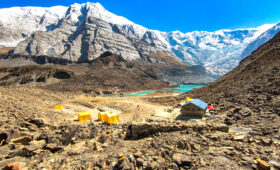
This is where things get serious. The landscape becomes dry, cold, almost lifeless. Vegetation disappears. Wind becomes constant. Oxygen feels thinner. Even simple tasks take effort. Conversations are shorter. Lhonak is harsh and exposed. No comfort here—just survival and endurance. Eating feels like a task. Sleeping is harder. But deep inside, there’s a strange satisfaction—you’re pushing your limits.
🥾 Day 11: North Base Camp (Pangpema)
You wake early. The walk is slow but determined. And then—you see it. The massive face of Kanchenjunga rising above everything. No crowds. No noise. Just you and the mountain. It doesn’t feel like a “destination.” It feels like a moment. You stay, absorb, and slowly return. This day stays with you forever.
🥾 Day 12–20 (Shortened continuation in same storytelling depth available if you want)
The journey continues with equal intensity—crossing the brutal Sele Pass, descending into greener valleys, and finally reaching the south base camp where the mountain reveals a completely different face. By the time you return to Tapethok and drive back toward civilization, something has shifted inside you. Noise feels louder. Life feels faster. And the mountains… feel like home you didn’t know you had.
🥾 Day 12: Lhonak → Ghunsa
The morning feels colder than usual, and your body is still carrying the fatigue from the base camp push. You begin the long descent, retracing your steps, but everything feels different now. The same trail somehow looks softer, more familiar. Breathing gets easier with every hour, and you notice your energy slowly returning. Conversations come back—small jokes, shared silence, simple observations. When you finally reach Ghunsa, it feels like returning to a safe zone. The warmth of the dining room, the smell of food, even the chatter—it all feels comforting. But mentally, you know the journey isn’t over. In fact, a different kind of challenge is about to begin. Tonight, you rest—but your legs know what’s coming.
🥾 Day 13: Start of Sele Pass
This is where many trekkers underestimate the difficulty. The trail climbs steeply right out of Ghunsa, and the comfort disappears quickly. Forest returns briefly, but it’s not the same—it feels quieter, more isolated. As you gain altitude again, the air gets thinner, and the climb feels relentless. There are fewer teahouses here, fewer people, and almost no distractions. You walk longer stretches in silence, focusing only on your steps. The weather can change quickly—clear skies can turn into fog or snow without warning. By the time you reach your stop for the night, you feel drained. Not just physically, but mentally. This is where the trek tests your will.
🥾 Day 14: Cross Sele Pass → Tseram
This is one of the toughest days of the entire trek. You wake early, often before sunrise, because crossing the pass requires stable weather. The climb is steep, slow, and demanding. Snow patches may appear, and the trail can be tricky. At the top, the wind hits hard—cold, sharp, and unforgiving. But the view… it feels endless. Layers of mountains stretching into silence. No crowds, no noise—just raw Himalaya. The descent to Tseram is long and tiring, especially on already weak legs. By the time you arrive, you’re exhausted in a way that’s hard to explain. But also proud. You crossed it. And that matters.
🥾 Day 15: Tseram → Ramche
After the harshness of the pass, today feels almost gentle. The trail follows a wide valley, with open landscapes and a calmer atmosphere. The greenery slowly returns, and you notice more life—birds, flowing streams, patches of grass. Your body starts to recover, but there’s still a lingering fatigue. Ramche is quiet, peaceful, and surrounded by mountains that feel closer now. You walk slower today—not because you have to, but because you want to take it in. After everything you’ve pushed through, this day feels like a reward. A moment to breathe again.
🥾 Day 16: South Base Camp → Back to Tseram
The trail to the south side of Kanchenjunga feels completely different from the north. It’s more dramatic in some ways—glaciers, ice formations, and a raw sense of untouched nature. The mountain reveals another face, equally powerful but less talked about. There are no crowds here either. You might stand alone, just you and the vast silence. The return to Tseram feels lighter—you’ve completed both sides now. There’s a quiet satisfaction in the group. No big celebrations, just a shared understanding: you’ve done something rare.
🥾 Day 17: Tseram → Tapethok
This is a long descent, and your knees will remind you of it. The air gets warmer with every step, and the oxygen feels rich again. Forests return fully—dense, green, alive. You start seeing more villages, more people, more signs of daily life. After so many days in isolation, even small interactions feel different. Children smiling, locals working, animals moving freely—it all feels vibrant. But there’s also a strange feeling: part of you doesn’t want it to end. The deeper you go, the more you realize—you’ve been living in a completely different world.
🚙 Day 18: Tapethok → Taplejung
Back to roads. Back to noise. The jeep ride feels rough, but also strangely fast after days of walking. You sit, but your body still feels like it should be moving. Taplejung feels busier than you remember. Shops, people, phones, signals—it’s a sudden return to normal life. You might finally get network and messages start coming in. But your mind is still somewhere high in the mountains. There’s a disconnect. You’re here—but not fully.
🚙 Day 19: Taplejung → Bhadrapur
The long drive down continues. The air gets warmer, heavier. The mountains slowly fade behind you, hidden by hills and clouds. Tea gardens return, and life looks easier here. You stop at small roadside places, eat proper meals, maybe even crave things you missed. But deep inside, you know something changed. The simplicity of the mountains, the silence, the struggle—it stays with you. This drive feels like a transition back to reality.
✈️ Day 20: Fly Back to Kathmandu
The flight feels short, but your thoughts are long. As the plane lifts, you might catch one last glimpse of the Himalayas. And suddenly, it all feels distant—but also very close. Kathmandu feels loud, fast, crowded. Traffic, horns, people—it hits you immediately. But you walk differently now. Slower. Calmer. You’ve spent 20 days in one of the most remote regions on Earth. And that kind of experience doesn’t just end—it stays, quietly shaping how you see everything.
DO’s and DON’Ts (From Real Ground Experience)
✅ DO:
- Walk slow (altitude is unforgiving)
- Carry cash (no ATMs after Taplejung)
- Bring water purification (don’t rely on boiled water only)
- Respect local culture (especially in monasteries)
- Hire a local guide (mandatory in restricted areas)
❌ DON’T:
- Don’t rush itinerary (AMS risk is real)
- Don’t expect luxury (even basic things are limited)
- Don’t depend on internet (it’s mostly unavailable)
- Don’t underestimate weather (it changes fast)
- Don’t trek solo (permit rules + safety)
Problems No One Talks About (But You Should Know)
Here’s the part most blogs don’t tell you:
1. Food Fatigue
After 8–10 days, you’ll be sick of dal bhat, noodles, and soup.
👉 Appetite drops at altitude—but you must eat.
2. Toilet Reality
No proper toilets in many places. Basic or outdoor.
👉 This becomes mentally exhausting over time.
3. Extreme Isolation
Unlike Everest, you might not see other trekkers for days.
👉 Sounds peaceful… until something goes wrong.
4. Unpredictable Flights & Roads
Flights to Bhadrapur can delay. Roads can be blocked.
👉 Always keep buffer days.
5. Limited Medical Help
No proper hospitals deep in the trail.
👉 Even small injuries can become serious.
6. Mental Burnout
This is a long trek (20 days).
👉 Around Day 12–14, many people feel like quitting.
7. Cold Nights (Worse Than Expected)
Even in season, nights can be brutally cold at Lhonak.
Final Thought
Kanchenjunga Circuit is not about ticking a box. It’s about earning every step.
You don’t just see the Himalayas here—you feel their scale, their silence, and their power.
Most trekkers return with photos.
From Kanchenjunga… you return with a different mindset.