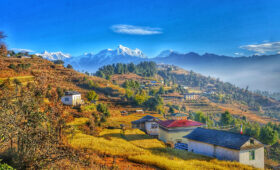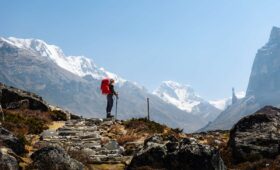
If you are searching for a less-crowded trekking route in Nepal with giant mountain scenery, waterfalls, glacial lakes, and raw Himalayan landscapes, the Annapurna North Base Camp Trek deserves serious attention. Also known as the Maurice Herzog Trail, this route follows the historic northern approach to Annapurna I (8,091 m)—the world’s first 8,000-meter peak ever climbed.
Unlike the busy South Annapurna Base Camp route, North ABC remains quieter, wilder, and more adventurous. It is ideal for trekkers who want dramatic scenery without heavy tourist traffic.
In this guide, you’ll learn everything about the difficulty level, best season, permits, accommodation, and what to expect on the Annapurna North Base Camp trek.
Where Is Annapurna North Base Camp?
Annapurna North Base Camp lies in Myagdi District of Gandaki Province, Nepal. The trail usually starts after reaching Beni, then continues by jeep toward the trailhead areas such as Humkhola before ascending through forests, waterfalls, alpine terrain, and glacial landscapes.
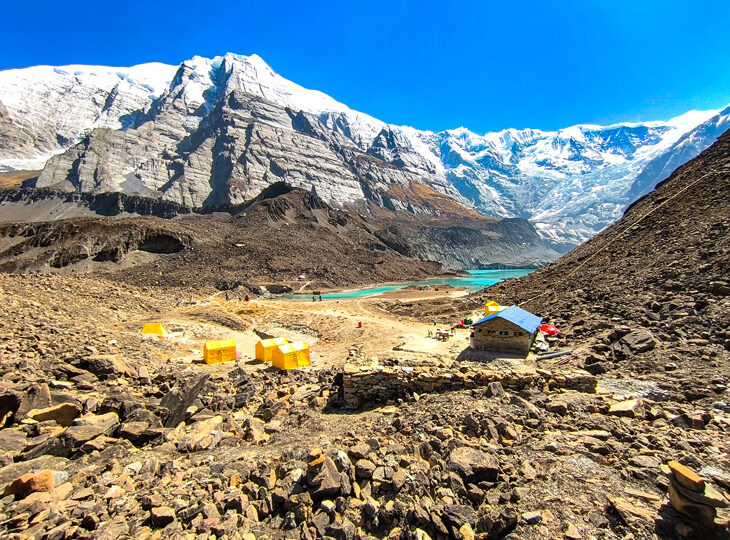
The final destination is around 4,190 meters, with nearby Panchakunda Lake (4,050 m) adding another major highlight.
Annapurna North Base Camp Trek Difficulty Level: How Demanding Is It?
Overall Difficulty: Moderate to Challenging
The Annapurna North Base Camp Trek is generally considered a moderate trek, but it can feel challenging because of steep climbs, long walking days, rough terrain, and limited facilities.
It is not a technical climbing route, so no mountaineering skills are needed. However, good stamina and basic trekking fitness are important.
Why It Feels Challenging
1. Steep Ascents and Descents
Several sections involve continuous uphill hiking through forests and rocky paths. Knees can also feel pressure during descent.
2. High Altitude
The base camp sits above 4,000 meters. Some trekkers may experience mild altitude symptoms such as headache, fatigue, or shortness of breath.
3. Remote Terrain
This trail is less commercialized than many classic treks. That means fewer tea houses, less infrastructure, and more basic conditions.
4. Long Travel Days
Kathmandu to Beni and jeep transfers can be tiring before the trek even starts.
Who Can Do This Trek?
This trek is suitable for:
- Beginners with decent fitness and determination
- Experienced trekkers seeking a new route
- Domestic travelers wanting a short Himalayan adventure
- Photographers and nature lovers
Fitness Tips Before Trekking
Prepare with:
- Stair climbing
- Hiking practice
- Cardio workouts
- Leg strengthening
- Walking with backpack
What Is the Best Time to Visit Annapurna North Base Camp?
Choosing the right season makes a huge difference.
Best Season #1: Spring (March to May)
Spring is one of the best times because:
- Rhododendron forests bloom
- Stable weather
- Warm daytime temperatures
- Clear mountain views
This is excellent for photography.
Best Season #2: Autumn (September to November)
Autumn is often considered the top trekking season in Nepal.
Benefits:
- Crisp mountain views
- Dry trails
- Comfortable temperatures
- Blue skies after monsoon
If you want the most reliable weather, choose autumn.
Winter (December to February)
Possible, but colder.
Expect:
- Snow in higher sections
- Freezing nights
- Fewer trekkers
- Beautiful clear skies
Good for prepared trekkers.
Monsoon (June to August)
Usually least recommended because:
- Rainy trails
- Leeches in forests
- Landslide risk on roads
- Cloud-covered mountains
Unless you specifically enjoy monsoon trekking, avoid this season.
Permits Required for the North ABC Trek
Before starting the trek, make sure you carry the necessary permits.
1. ACAP Permit
You normally need the Annapurna Conservation Area Permit (ACAP) because the route falls within the Annapurna region.
2. TIMS Card (Depending on Current Rules)
Some trekkers may also require a TIMS card depending on updated trekking regulations.
Where to Get Permits
Usually available in:
- Kathmandu
- Pokhara
Bring:
- Passport copy
- Passport photos
- Cash for fees
Important Tip
Permit rules in Nepal can change. Always verify current regulations before departure.
Accommodation: What to Expect
Because this route is still developing, accommodation is more basic than popular trekking trails.
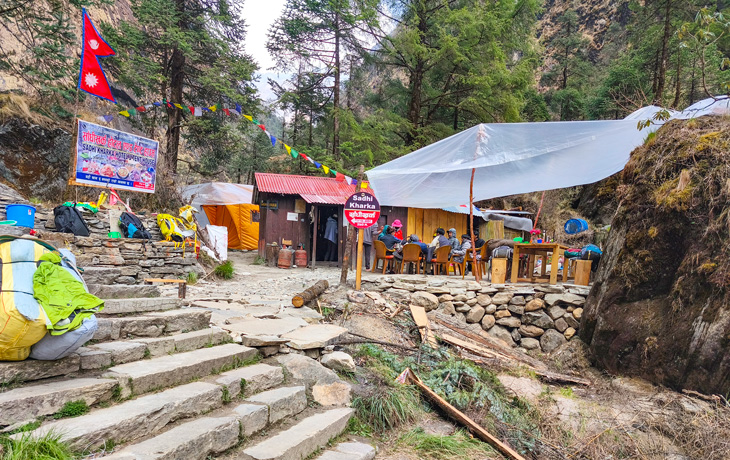
Tea Houses / Local Lodges
Lower villages may have:
- Basic tea houses
- Shared rooms
- Local meals
- Warm hospitality
Do not expect luxury lodges.
Higher Camps
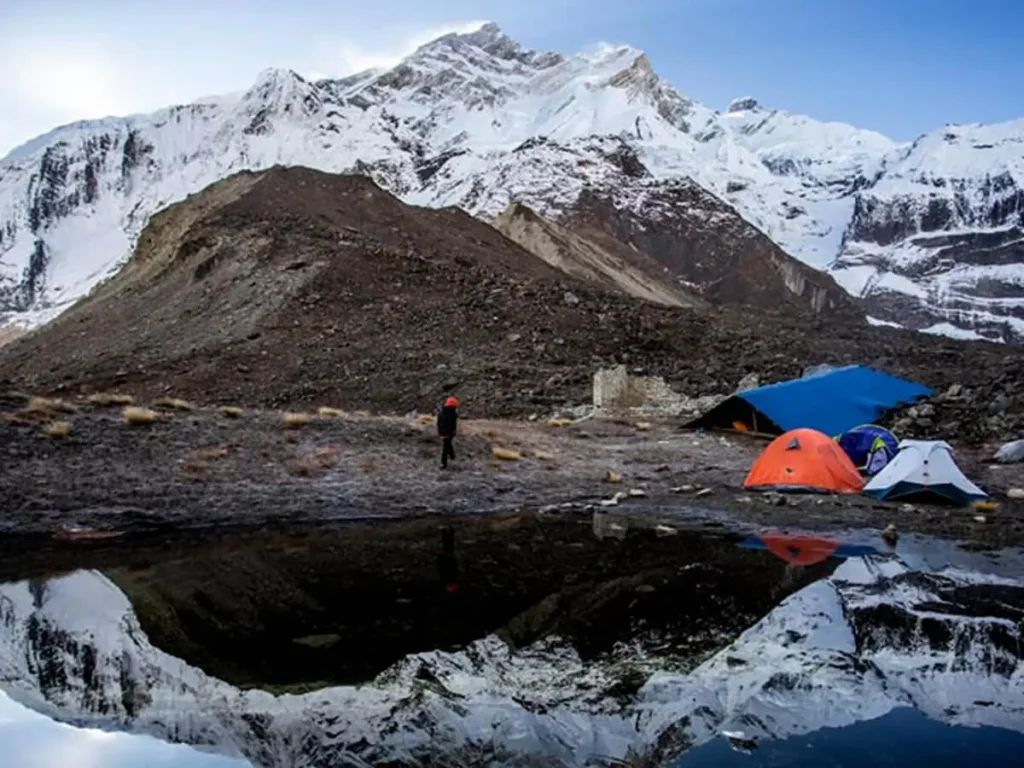
Closer to Panchakunda and North ABC, accommodation may be:
- Very simple lodges
- Community shelters
- Seasonal camps
- Tent stays in some cases
Always check the latest local conditions before going.
Electricity & Charging
Available in some lower areas, limited higher up. Carry:
- Power bank
- Headlamp
- Spare batteries
Toilets & Showers
Basic toilets are common. Hot showers may be unavailable or extra charge.
Food on the Trek
Typical meals include:
- Dal Bhat
- Noodles
- Fried rice
- Potato dishes
- Tea / coffee
- Soup
Dal Bhat remains the best energy meal for trekking.
Why Annapurna North Base Camp Is Special
Many treks offer mountain views. This trek offers something more: a sense of discovery.
You get:
- Close-up view of Annapurna I
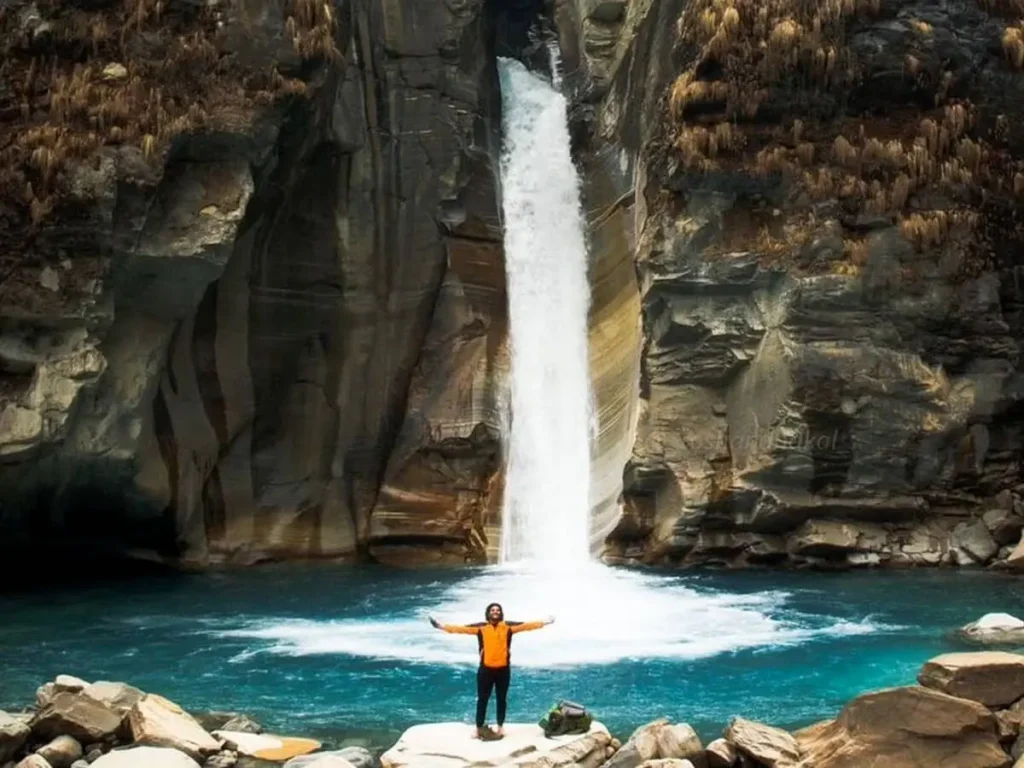
- Massive waterfalls
- Glacial landscapes
- Panchakunda Lake
- Historic expedition route
- Fewer crowds
- Authentic local culture
It feels raw, genuine, and adventurous.
Suggested Short Itinerary (4 Days)
Day 1
Kathmandu to Beni
Day 2
Drive to trailhead, hike to Guphaphant
Day 3
Hike to Panchakunda Lake and North Base Camp
Day 4
Descend and return toward Kathmandu
(Extra day recommended for weather or flexibility.)
Packing Essentials
Bring:
- Good trekking shoes
- Warm jacket
- Rain layer
- Trekking poles
- Water bottle
- Sunscreen
- Snacks
- Power bank
- First aid kit
Final Verdict: Is Annapurna North Base Camp Worth It?
Absolutely. If you want a shorter Himalayan trek with huge rewards and fewer tourists, Annapurna North Base Camp is one of Nepal’s most exciting emerging trekking routes.
It combines history, mountain drama, remote beauty, and real adventure—all in one trail.
For trekkers wanting something beyond the usual ABC route, this hidden northern side of Annapurna may become your favorite trek.